
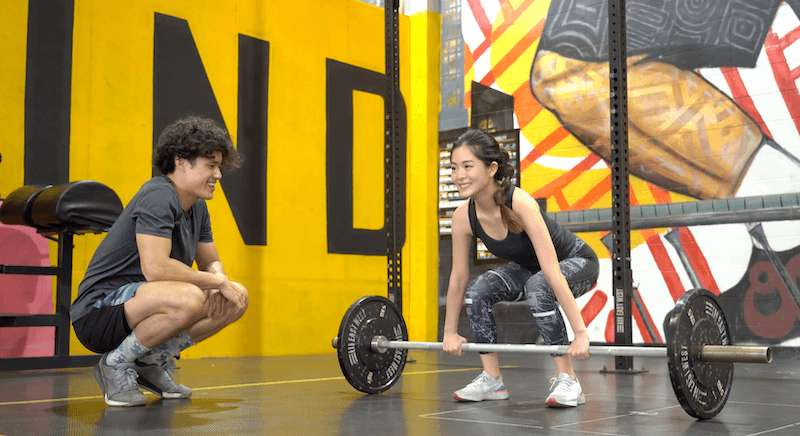
Most athletes try to improve by feel.
That works until it does not.
The problem is simple: movement happens too fast, and your body does not always tell you the truth. What feels explosive can look rushed. What feels balanced can look unstable. What feels deep enough can still miss the positions you need.
That is why video matters. It lets you see what you cannot feel.
The good news is that you do not need a lab or a 45-minute review session to get useful insight. You just need a repeatable process.
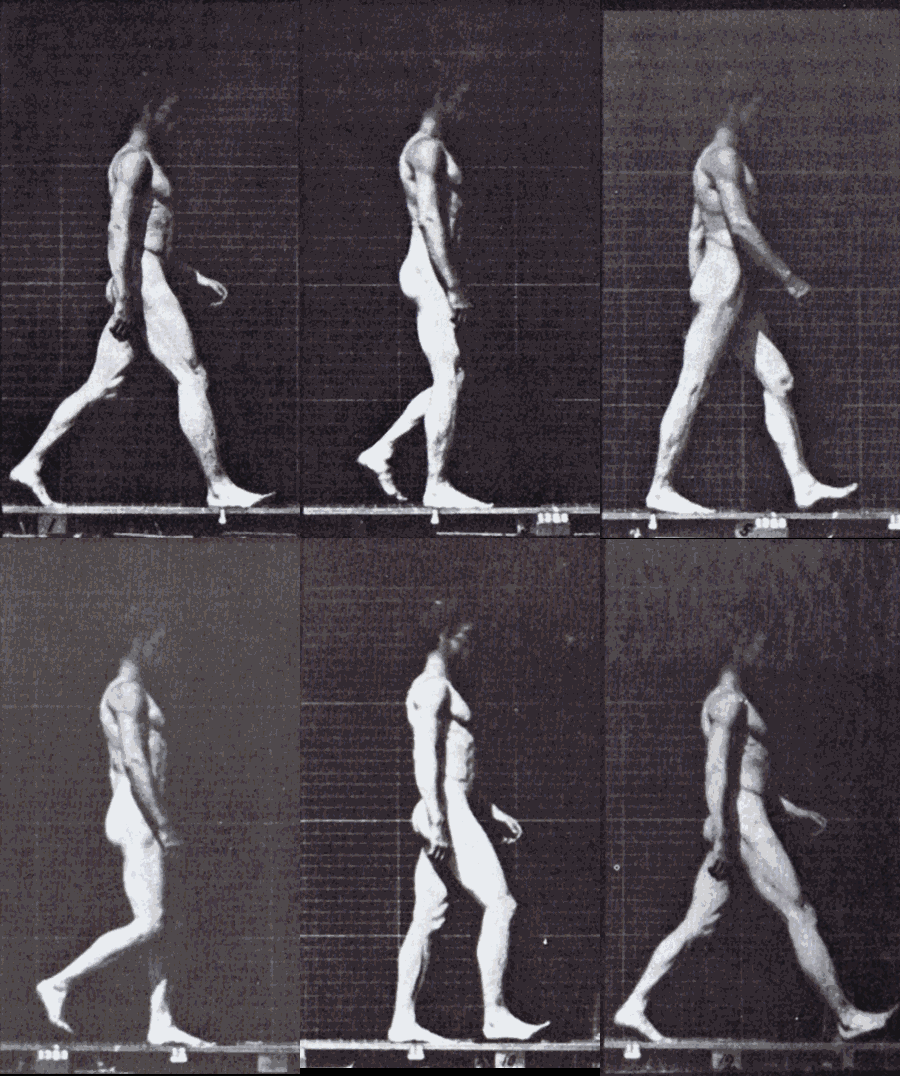
Early movement studies made the same point modern video analysis still proves: when you break motion into frames, patterns become visible.
This is the 5-minute framework we recommend for analyzing almost any movement, from a sprint start to a squat to a tennis serve.
Minute 1: Watch the rep at full speed
Start by watching the clip once or twice at normal speed with no drawing and no pausing.
Your first job is not to diagnose everything. It is to answer one question:
What is the biggest visible problem in this rep?
Not three problems. Not ten.
One.
Examples:
- The athlete loses balance on landing
- The bar path drifts forward in the squat
- The serve rhythm breaks before contact
- The first step out of the sprint start is too upright
If you try to fix everything at once, you will make the review noisy. Good analysis starts by finding the highest-value mistake.
Rule: leave the first viewing simple. Full speed tells you about rhythm, timing, coordination, and intent. Slow motion is useful later, but it should not be your first lens.
Minute 2: Find the key positions
Now scrub through the clip and stop at 2 to 4 positions that matter most.
The exact positions depend on the movement, but the logic stays the same. You want frames that reveal setup, transition, and outcome.
For most movements, that means:
- Start position: where the athlete begins
- Load or transition: where force is being prepared or redirected
- Peak position: where the movement succeeds or fails most clearly
- Finish or recovery: where the result becomes obvious
In a squat, you might stop at setup, mid-descent, the bottom, and the first frame coming up. In sprinting, you might stop at the set position, first push, first ground contact, and early acceleration.
These frames give structure to the review. Instead of saying "it looks off," you can say exactly where it breaks down.
Minute 3: Compare lines, angles, and direction
Once you have the key frames, start asking objective questions.
You do not need complex biomechanics to do this well. Start with a few basics:
- Is the athlete moving in the intended direction?
- Does the center of mass stay controlled?
- Are important joint angles changing when they should?
- Is the visible range of motion enough for the task?
- Does one segment move too early or too late relative to the others?
This is where video becomes more useful than memory. You are no longer relying on vague impressions. You are checking positions and timing against something you can actually see.
For example:
- In a squat, you may notice the hips shoot up before the chest
- In a serve, you may notice the shoulder and trunk are out of sequence
- In a jump landing, you may notice the knees collapse inward as force is absorbed
That is basic kinematics: looking at motion, position, and sequencing before worrying about deeper cause.
Minute 4: Compare against a better rep
This is where progress gets faster.
Do not just analyze a rep in isolation. Compare it against one of these:
- The athlete's own best rep
- A previous rep from last month
- A teammate with cleaner mechanics
- A model rep from a high-level athlete
The side-by-side view matters because many technique problems are easier to see by contrast than by inspection.
You may not notice that an athlete opens too early until you compare them with someone who stays stacked longer. You may not notice poor acceleration angles until you compare the first three steps side by side.
When you compare, do not ask "who looks better?"
Ask:
- What happens earlier?
- What happens later?
- What position is missing?
- What direction changes?
That turns comparison into coaching instead of opinion.
Minute 5: Give one correction, not a lecture
Your review should end with one clear action.
Not a technical essay. Not seven cues. One useful next step.
A good correction usually has three parts:
- What the athlete is doing now
- What needs to change
- What cue or drill will help create the change
Example:
"Right now your chest rises late out of the bottom. Next rep, keep the chest and hips coming up together. Think 'push the floor away' instead of 'lift the hips.'"
That is specific, visual, and actionable.
The goal of analysis is not to sound smart. The goal is to make the next rep better.
What to look for in almost every movement
If you are not sure where to start, review these five things first:
1. Balance
Does the athlete look stable, or are they constantly recovering from poor positions?
2. Timing
Do the body segments work together, or does one part rush ahead of the rest?
3. Direction
Is force being expressed where the sport demands it?
4. Depth or position
Is the athlete actually reaching the position the movement requires?
5. Consistency
Does the same error show up every rep, or was this a one-off miss?
You can use those five questions in almost any sport.
Common mistakes when analyzing video
The biggest review mistakes are predictable:
Starting in slow motion
Slow motion helps, but if you start there, you can lose rhythm and intent.
Looking for too much
Most reviews collapse because the coach or athlete tries to fix every flaw in one pass.
Confusing style with function
Different athletes can move differently and still move well. Focus on whether the movement is effective, repeatable, and safe enough for the context.
Giving feedback with no visual anchor
If you say "stay tighter" or "be more explosive" without showing the frame that matters, the advice is harder to apply.
Why this works
This framework works because it reduces analysis to a few questions that can be repeated over and over:
- What is the main problem?
- Where does it show up?
- What does the video prove?
- What is the single next correction?
That is enough to create better feedback loops.
Athletes improve faster when feedback is visible. Coaches make better decisions when they can review the same movement frame by frame instead of relying on memory. Over time, that means less guessing and more objective coaching.
Start simple, then get more detailed
You do not need to use every tool on every clip.
Start with full-speed viewing, a few key frames, and one correction. Once that becomes habitual, you can get more precise with comparisons, annotations, and repeated tracking across sessions.
The important part is not complexity.
It is consistency.
If you review movement the same way every time, patterns appear quickly. And once you can see the pattern, you can coach it.
Ready to get started? Download KineVision today from the App Store and rediscover the power of professional video analysis.
Comparing coaching apps? See KineVision vs OnForm or our Coach's Eye alternative, or KineVision vs Dartfish.